
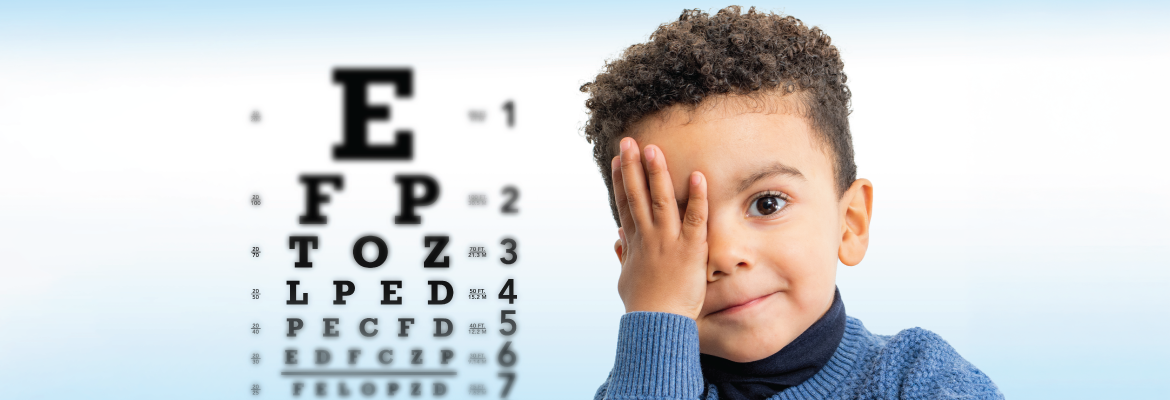
Early vision screening plays a critical role in a child’s overall development, often influencing far more than just eyesight. In the earliest years of life, children learn about their world largely through incidental learning, which is the natural, unplanned absorption of information that occurs as they observe people, environments, movement, and everyday interactions.
Clear, consistent vision allows children to notice facial expressions, imitate actions, recognize patterns, and connect words with objects and experiences. When vision challenges go undetected, these missed visual cues can quietly limit concept development, social understanding, and language growth. By identifying potential concerns early, vision screening helps ensure children have full access to the rich visual information that fuels learning, curiosity, and cognitive development.
Vision concerns can present themselves in two ways: ocular or brain based.
Ocular Conditions
Ocular conditions, such as amblyopia (“lazy eye”) and strabismus (eye misalignment), often develop without obvious symptoms. If not addressed early, ideally before age 7, they can cause permanent vision loss. Screening tools help catch these issues during the critical period when treatment is most effective.
Handheld digital devices, like the Spot Vision Screener, are used to detect refractive errors and eye alignment issues. Illinois and Massachusetts include stereoscopic tests and near-vision checks alongside acuity screening, and many states now allow instrument-based screening for children who cannot complete chart-based tests. These varied approaches reflect a growing recognition that early, accurate screening is essential for preventing vision-related learning barriers.
Brain-Based Conditions
Traditional vision screenings do not always identify neurological forms of visual impairment. Recent work highlighted in TX SenseAbilities describes a screening tool developed to help identify indicators of cortical/cerebral visual impairment (CVI), a brain-based vision condition that may not be detected through standard eye exams.
This tool focuses on how a child uses vision in everyday environments and can help educational teams recognize behaviors that may signal a neurological visual processing difficulty. Screening tools like this can support earlier referrals for evaluation and intervention, helping children access services they need sooner. The Neonatal Assessment Vision European Grid (NAVEG) is being used across the country, including in Michigan.
MDE RBLV Vision Screening Resource
MDE RBLV’s Early Vision Screening Checklist [PDF] may be used by educational teams to identify vision concerns, both ocular and brain based, as early and quickly as possible. The fillable form can be used electronically or as a printed copy.
If you would like additional information or training on this tool or on the NAVEG, please contact Johanna Brutvan at [email protected].
Additional Resources
Although vision screening is a great place to start, research shows that we may still miss up to one third of children with an eye condition. The InfantSEE program offers access to free exams from an optometrist. Another resource may be your local Lions Club.